Perspective
Intro
Hello everybody. I hope you all enjoyed a nice Thanksgiving this year and took advantage of your holiday break! This week I’ll be talking about reflection and how mindset affects performance.
The Limitations of Reflection
For anyone who’s been following my performance lately, it hasn’t been too hot. The problems I missed during the last contest were ones that were within my solving abilities, but I failed to solve them when it mattered most. Now a normal person here would be like, “I’m sure it’s just nerves or luck, so I’ll just enjoy my holiday break with my family”. At least that’s what I’m assuming. But no, no, no, me from 4 days in the past decided that there was a better alternative to time off. Instead, I’d do 1-2 Virtual Contests every day and figure out if it was truly nerves or bad luck causing poor performance. TL;DR No.
Day 1
So far, so good or at least no so bad. I only solved AB of a Div3 because I forgot to return 0 after printing a solution in C which led to 90 minutes of frustration. Estimated rating delta of -60, but it can only go up from here right?
Day 2
Hey lets go, only a -1 delta and this time I solved ABC so clearly without too much trouble. That MUST mean that the first virtual contest performance was just bad luck.
Days 3, 4, & 5
Someone please send help.
At the end of the 5 days of contests, I had a wall of negative deltas in my spreadsheet and a deflated ego.
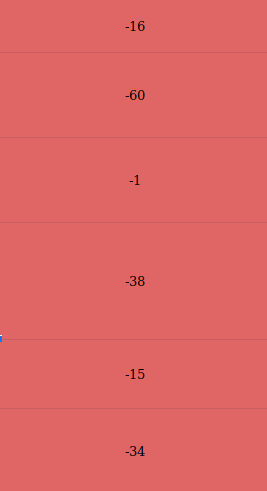
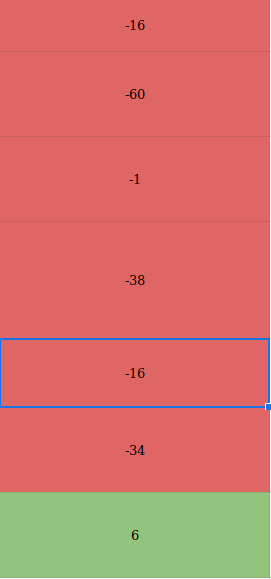
Time and time again, I was getting slow solves on easy problems and failing to solve tougher problems. The reflections I wrote after each contest seemed to place my failure on just about every aspect of my abilities you could imagine, yet the underlying cause still eluded me. That is until help came in the form of a CodeForces message. One of my readers who I’ll call VwbJmvY (I’ve encrypted his name for privacy), reached out and said he’d be willing to help me on my quest to achieve world domination along with 2000 CF in a year. It took him 10 minutes to figure out what I couldn’t figure out in 5 days: I needed to slow down and work through problems before implementation. In retrospect, it seems glaringly obvious that attempting to think through the problem while implementing, for me personally, was leading to wrong ideas along with a lot of wasted time trying to implement those bad ideas; but without a second pair of eyes, I might never have found this error. I’ve learned it’s really important to get help and a fresh perspective when you’re stuck on a problem that you really can’t figure out. Emphasis on the bold part of that sentence. It’s always important that you attempt to solve problems by yourself and only ask for help when you’ve truly ran out of ideas. Without investing the upfront cost of trying to solve the problem yourself, the return you get will be severly diminished. After this one simple change in how I approach problems during contests, my next virtual contest also became first postive delta.
Mindset Shift
My new mentor, VwbJmvY, has also helped me change the way I think during contests and my view on success. During the first two contests I partook in, rating was at the forefront of my mind. This led to a lot of rushed and half thought out attempts to try and submit as fast as possible. Not only did this serve me more penalties and WAs, the nervousness also rendered me incapable of working through the tougher problems. Combine these two factors together and you get a Kaunta that is a complete and utter brick. Doing all these practice contests also shattered my assumption that latter problems are always harder than earlier problems. Seeing as we all have areas where we’re stronger in, the steady curve of difficulty won’t always hold true. Just taking a quick read of the next problem and realizing it’s easier for you could mean the difference between a positive and negative delta.
Training Changes
As you might’ve noticed, I’ve switched to using Google Spreadsheets instead of a physical notebook. As beneficial as physically writing out reflections are, having it all online is insanely convenient and also helped me organize my practice. I’ll be doing a more in-depth coverage of this soon so stay tuned!
Conclusion
Thanks again for reading! If you have any feedback on the more casual tone or anything about the blog, I’d love to hear it :) As always, I hope you guys enjoyed this week’s post and learned something new. See you again next week!
If you enjoyed this post, you can get notified of future ones here!